How AI-Powered HRMS Assistants Help HR Teams, Managers and Business Owners Work Smarter
Introduction: Why AI-Powered HRMS Assistants Are Becoming Important
Human resource management involves much more than maintaining employee records and processing payroll. HR Teams, managers and business owners regularly need to review attendance, leave, claims, overtime, employee information, payroll data, and other workforce-related details to keep daily operations running smoothly.
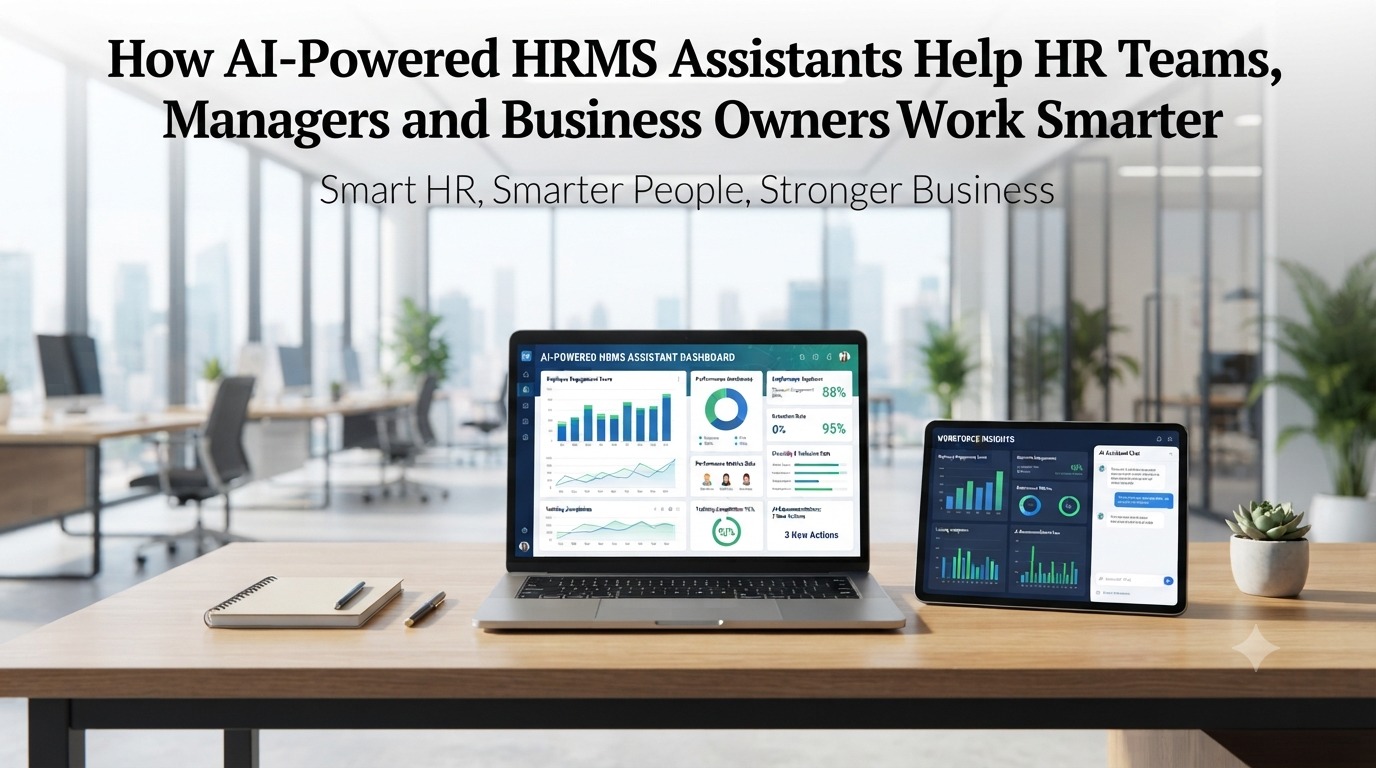
As HRMS platforms continue to evolve, artificial intelligence is making it easier to access and work with this information. Instead of spending time navigating through different menus and reports, users can interact with an AI-powered HRMS assistant to find relevant information, understand workforce data, and support routine decision-making more efficiently.
AI-powered HRMS assistants are becoming an important part of modern HR technology because they can make HRMS information more accessible while helping teams reduce repetitive work and respond to workforce-related questions faster.
The goal is not to replace HR professionals or managers. Instead, AI can act as an additional layer of assistance that helps them work with HR information more efficiently.
For HR2eazy, this direction is reflected through HR2eazy EazyDesk, an AI-powered desktop assistant designed to support authorised HR users, managers and business decision-makers by making HR, payroll and workforce information easier to access.
What Is an AI-Powered HRMS Assistant?
An AI-powered HRMS assistant is an intelligent interface that works alongside an HR management system to help users access and understand HR and workforce information more conveniently.
Traditional HRMS platforms often contain a large amount of information across different modules, including employee profiles, attendance, leave, payroll, claims, overtime, and reports. Finding the right information may require navigating through multiple screens or generating specific reports.
An AI-powered assistant can provide a more conversational way of interacting with this information. Depending on the system and the user's access permissions, users can ask questions in natural language and receive relevant information from the HRMS.
For example, instead of manually checking several attendance records, a Manager may ask:
- Which employees are absent today?
- What is the attendance summary for this department?
- Which claims are pending approval?
- Who has pending leave applications?
- Which team has the highest overtime trend?
- Where can I find this employee's profile?
This makes the HRMS experience more intuitive while helping users spend less time searching for information.
How AI-Powered HRMS Assistants Make Workforce Management Easier
Faster Access to Workforce Information
HR and management teams often need information quickly to make day-to-day decisions. An AI-powered HRMS assistant can help users locate relevant workforce information without requiring them to manually search through multiple sections of the system. This can be particularly useful when reviewing employee information, attendance, leave, claims, payroll-related data, or other HR records.
Better Visibility Into Attendance and Workforce Activity
Attendance information can provide valuable insight into daily workforce availability. Instead of manually reviewing attendance records, an AI-powered HRMS assistant can help users quickly identify information such as absent employees, late arrivals, early sign-outs, or department-level attendance summaries — giving HR Teams, managers and business owners a clearer view of workforce activity and helping them respond to attendance-related issues more efficiently.
Easier Leave and Claims Monitoring
Managing leave applications and employee claims can involve reviewing multiple records and approval statuses. AI assistance can make it easier to identify pending applications, review relevant information, and understand which requests may require attention. For example, a manager could quickly identify pending leave applications for their team or check which claims are waiting for approval.
Simplifying Employee Information Searches
HR teams manage large amounts of employee information. Searching for a specific employee profile or finding relevant workforce details can take time when done manually. An AI-powered HRMS assistant can provide a faster way to locate information that users are authorised to access — especially useful when HR teams or managers need to review employee information while handling routine workforce-related tasks.
Supporting Workforce Analysis
AI-powered HRMS tools can also help users work with workforce data more efficiently. Instead of simply viewing individual records, users can use the available information to identify trends and areas that may require attention, such as overtime patterns, attendance changes, or workforce activity across departments. This can help transform HRMS data from something that is simply stored into information that can support everyday decision-making.
Questions HR Teams, Managers and business owners Can Ask an AI-Powered HRMS Assistant
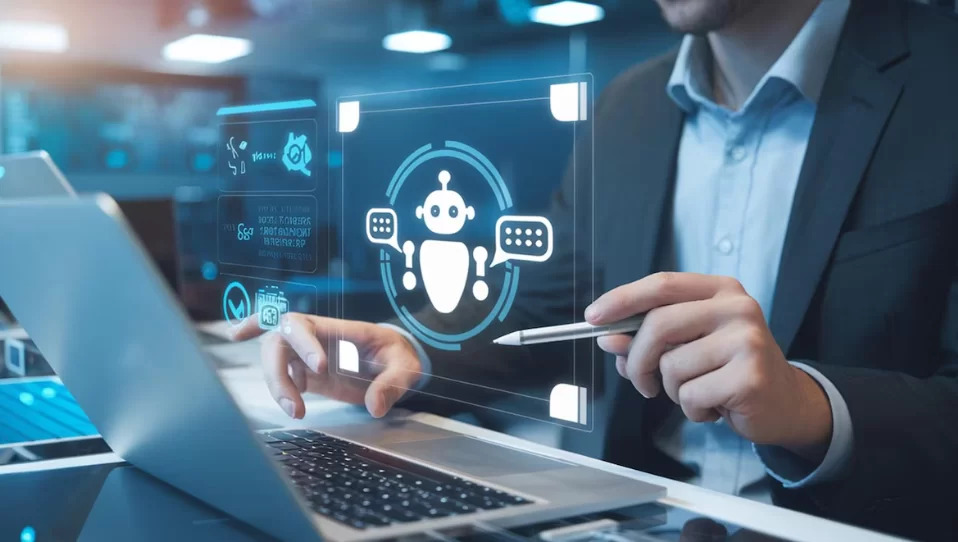
One of the main advantages of an AI-powered HRMS assistant is the ability to interact with HR information using natural-language questions. Depending on the capabilities of the HRMS, examples may include:
- Which employees are absent today?
- Who has pending leave applications?
- What is the attendance summary for this department?
- Which claims are pending approval?
- Where can I find this employee's profile?
- What payroll-related information is available for review?
- Which team has the highest overtime trend?
- What workforce information is available for this department?
- Can I view the attendance information for a specific period?
The exact questions an AI assistant can answer will depend on the HRMS platform, available modules, data, and user access permissions. The key advantage is that users can interact with HR information in a more natural and convenient way instead of relying entirely on traditional navigation and manual searches.
Benefits of AI-Powered HRMS Assistants for Businesses
Saves Time on Routine Information Searches
HR professionals and managers spend a significant amount of time looking for information. AI assistance can reduce the time required to locate commonly needed HR and workforce data.
Improves Workforce Visibility
When important information is easier to access, HR Teams, managers and business owners can gain a clearer understanding of attendance, leave, claims, overtime, and other workforce activities.
Supports Faster Decision-Making
Having relevant information available quickly can help managers and HR teams respond to workforce-related situations more efficiently.
Reduces Dependence on Manual Searches
Traditional HRMS navigation can sometimes involve moving through multiple menus, filters, and reports. An AI-powered assistant can provide a more direct way to access relevant information.
Makes HRMS Platforms Easier to Use
AI can provide a more conversational experience, making it easier for users to interact with information stored within an HRMS without needing to remember exactly where every piece of information is located.
Helps HR Teams Focus on Higher-Value Work
By reducing time spent on repetitive information searches and routine tasks, AI can allow HR professionals to dedicate more time to workforce planning, employee engagement, compliance, and other strategic responsibilities.
What to Look for in an AI-Powered HRMS Assistant
Not every AI-powered HR tool provides the same capabilities. Businesses evaluating an AI-enabled HRMS should consider several important factors.
Integration With the HRMS
The AI assistant should work effectively with the underlying HRMS so that users can access relevant workforce information without maintaining separate systems.
Data Security and Access Control
HR systems contain sensitive employee and payroll information. AI features should work within appropriate access controls so users only receive information they are authorised to access.
Accuracy of Information
AI-generated responses should be based on reliable HRMS data. Businesses should consider how the system retrieves and presents information and how users can verify important details when required.
Support for HR and Workforce Processes
An AI assistant becomes more useful when it can work with the actual HR processes and modules used by the organisation, rather than functioning as a general-purpose chatbot disconnected from the HRMS.
Ease of Use
The purpose of an AI assistant is to simplify the user experience. A straightforward interface and natural-language interaction can make it easier for HR Teams, managers and business owners to access information.
Scalability
As organisations grow, their workforce data and HR requirements also become more complex. Businesses should consider whether the AI-powered HRMS can support their future requirements as well as their current needs.
AI Supports HR Teams — It Doesn't Replace Them
AI can make HR information easier to access and help automate or simplify routine processes, but human involvement remains essential.
HR professionals understand the context behind workforce situations, organisational policies, employee relationships, and business requirements. Managers also need to apply judgement when making decisions involving their teams.
AI should therefore be viewed as a support tool rather than a replacement for HR expertise. By combining AI assistance with human experience and decision-making, businesses can create a more efficient approach to managing workforce information.
The Future of AI-Powered HR Management
The role of AI in HR technology is expected to continue evolving as businesses look for faster and more efficient ways to manage workforce information.
Future HRMS platforms may increasingly use AI to help organisations identify trends, summarise workforce information, support reporting, simplify routine processes, and provide more intuitive ways to interact with HR systems.
The direction is moving beyond simply storing employee information toward making HR data easier to understand and use. For HR Teams, managers and business owners, this can mean less time spent searching for information and more time spent acting on it.
How HR2eazy Is Bringing AI Into HR Management
HR2eazy is continuously evolving its HR and payroll platform to make workforce management more efficient through technology and automation.
As part of this direction, HR2eazy EazyDesk provides an AI-powered desktop assistant designed to make HR, payroll, and workforce information more accessible.
As a Windows-based application, EazyDesk allows authorised users to access HR and workforce information from compatible Windows desktops, laptops or tablets.
EazyDesk helps users interact with information from the HR2eazy system through a more convenient interface, supporting activities such as reviewing workforce information, checking attendance-related details, monitoring claims, and accessing other relevant HR and payroll information.
By bringing AI assistance closer to the HRMS, EazyDesk aims to reduce the time users spend searching across different areas of the system and help them work with workforce information more efficiently.
As AI continues to become a bigger part of HR technology, solutions such as EazyDesk represent the next step toward making HRMS platforms more intelligent, accessible, and easier to work with.
Want to explore what HR2eazy EazyDesk can do for your organisation? Book a personalised HR2eazy demo and get a firsthand look at how AI can support your HR teams, managers, and business owners.
Conclusion
AI-powered HRMS assistants are changing how businesses interact with HR and workforce information.
Rather than relying entirely on manual searches and traditional HRMS navigation, HR teams, managers and Business owners can use AI assistance to access relevant information more quickly, monitor workforce activities, identify trends, and support everyday decisions.
The value of AI in HR is not simply about automation. It is about making the information already available within an HRMS easier to access and more useful.
As businesses continue adopting AI-powered HR technology, HRMS platforms will increasingly become more than systems for storing employee data. They will become intelligent tools that help HR teams, managers and Business owners work smarter, respond faster, and manage their workforce more effectively.